

Subscribe to our "Population in Perspective" Substack Here!
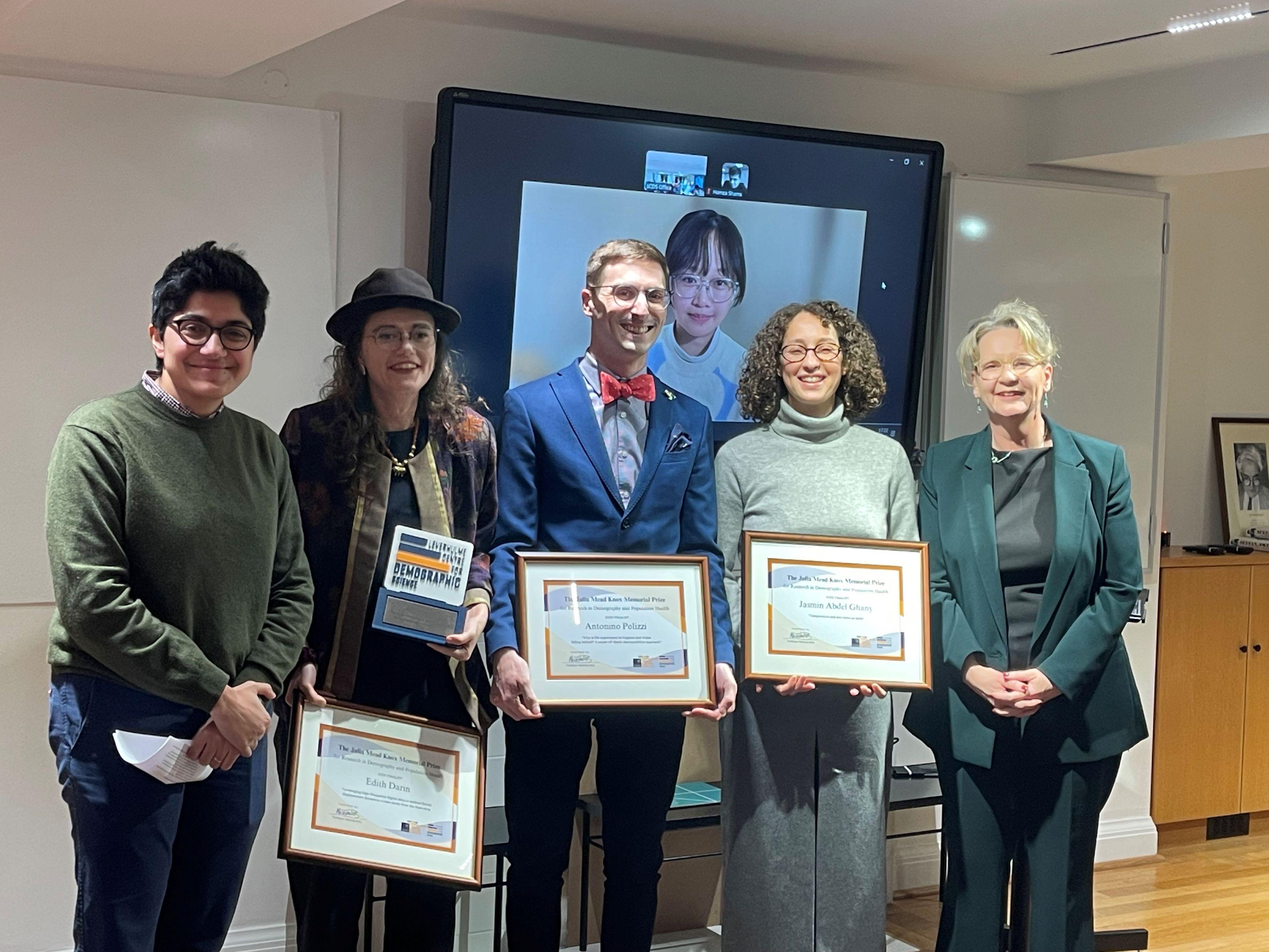
The Leverhulme Centre for Demographic Science (LCDS) is pleased to announce the winners of the 2025 Julia Mead Knox Memorial Prize for outstanding PhD work in the area interdisciplinary demographic research. 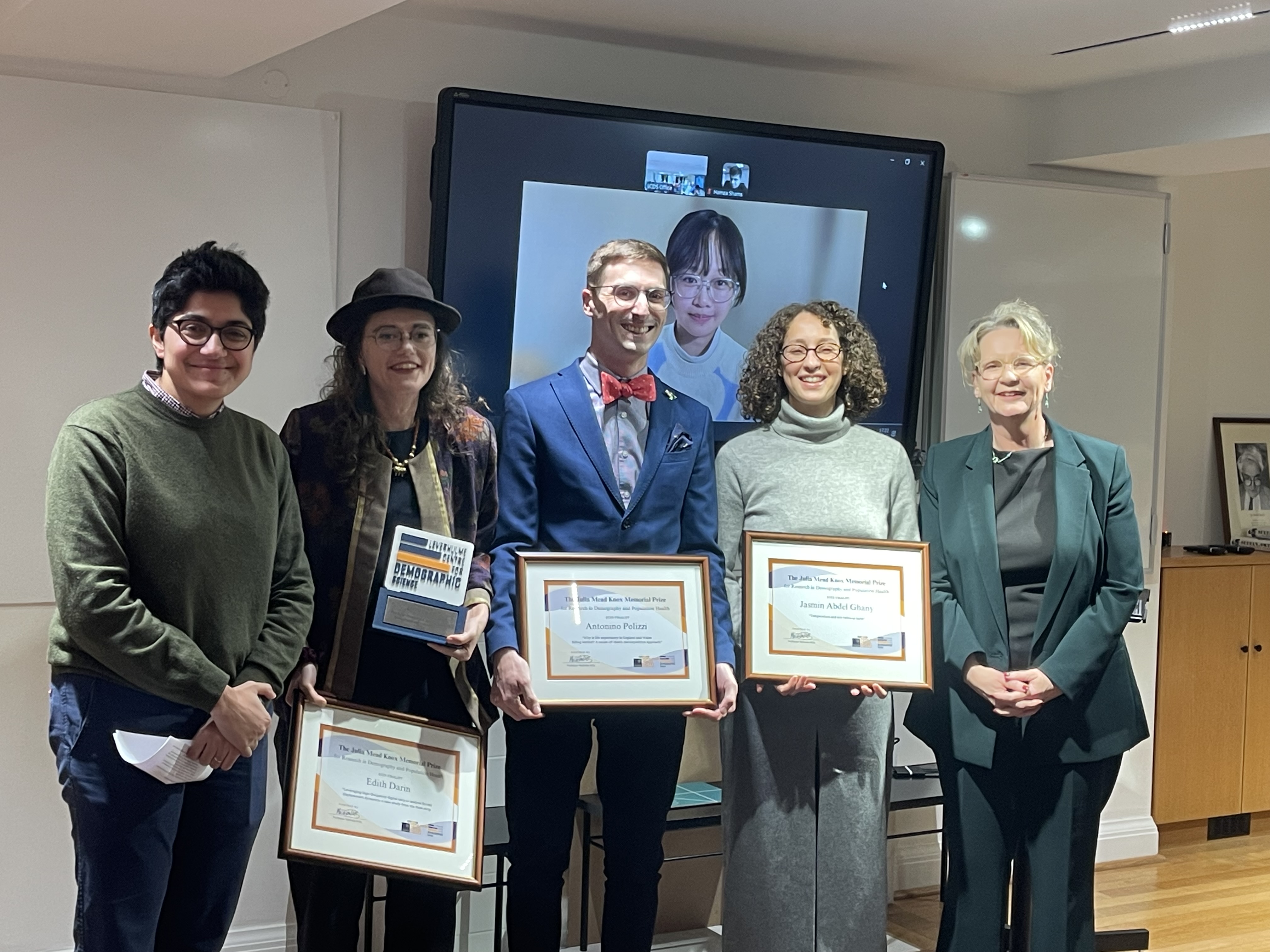
Award Ceremony pictured from left Jury Member Prof. Ridhi Kashyap, First Prize Winners Édith Darin and on screen Jiani Yan, Runners Up, Antonino Polizzi, Jasmin Abdel Ghany and Jury Member and Director LCDS, PhD supervisor Julia Mead Knox Prof. Melinda Mills
The award was established in memory of Julia Mead Knox, a PhD student at LCDS whose research focused on demography, inclusivity and diversity in genomic research and public health. Julia was deeply committed to social justice and is remembered as an exceptional scholar whose work embodied the interdisciplinary values of LCDS.The prize is awarded to PhD (DPhil) students from the University of Oxford who completed a thesis in the previous year.
Now in its second year, the Prize attracted an impressive range of submissions from across the University, including Oxford Population Health, Social Policy, Anthropology and Sociology. Faced with an outstanding field, the panel was pleased to award four submissions for their exceptional quality.
The jury noted: “This year we received an exceptionally high quality and diversity of submissions, reflecting the interdisciplinary strengths and reach of demographic research across the University of Oxford.”
FIRST PRIZE AWARD
Two joint first prize winners were: Édith Darin and Jiani Yan.
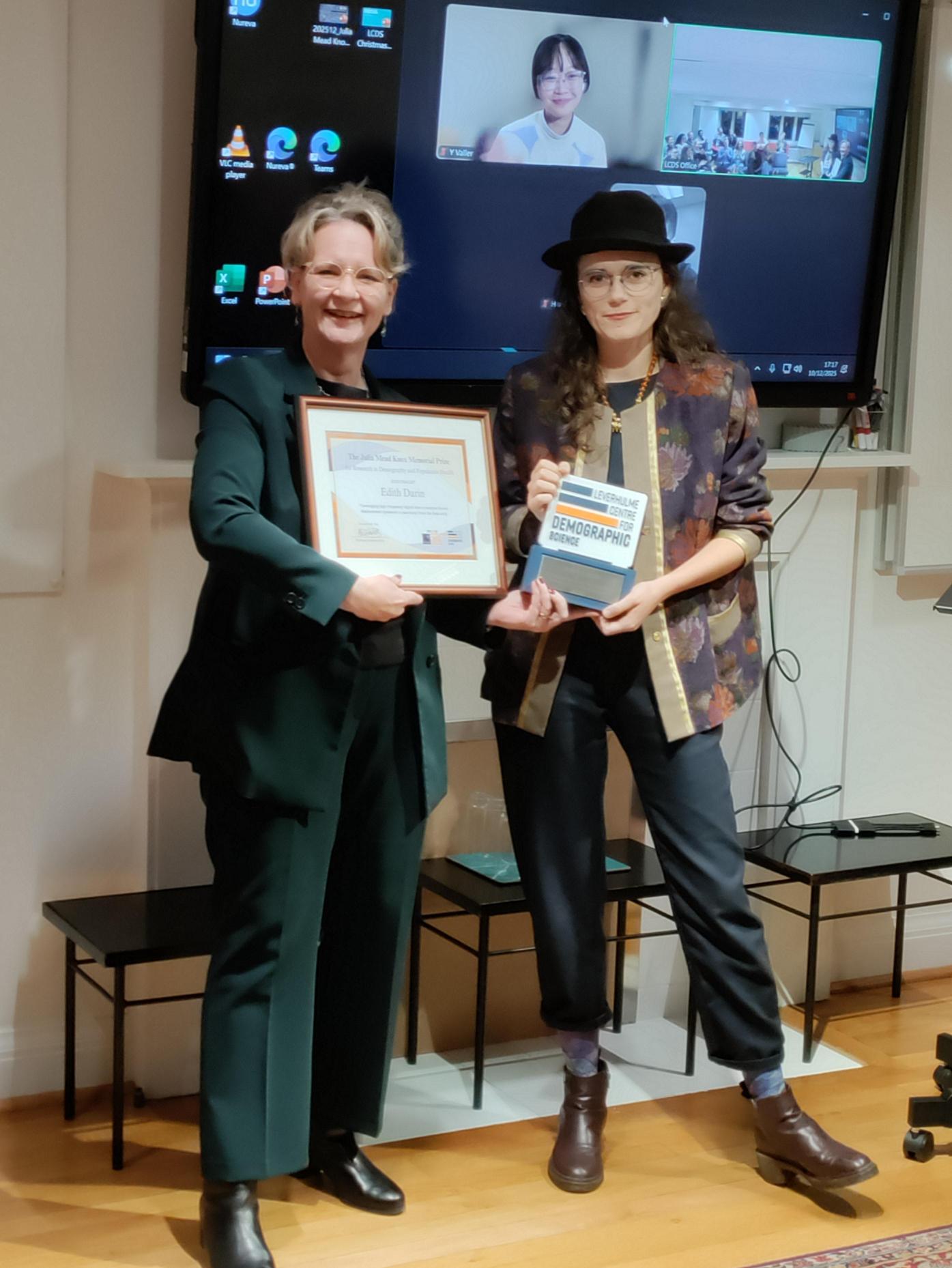
Édith Darin received the joint first-prize for her work: “Leveraging High-Frequency Digital Data to Analyze Forced Displacement Dynamics: A Case Study from the Gaza Strip.” Darin’s work focussed on the quantification and analysis of forced displacement, driven by political unrest or natural disasters, a topic increasingly central to humanitarian and demographic research. With displaced populations reaching record numbers, her work addresses the urgent need for accurate and timely data on displacement patterns. The article introduced an analytical toolbox designed to leverage the growing diversity of digital trace data to overcome disruptions of traditional data collection systems during crises, enabling high-frequency tracking of forced displacement. This toolbox was applied to the Gaza Strip following the 2023 Hamas attack, where up to 72% of the population was displaced, for a multifaceted assessment of the consequences of war on population movement, connecting mobility patterns to ground events, displacement by gender, and cross-country comparisons.
The jury noted: “Édith Darin’s work exemplifies the power of demography to provide rapid population estimates of displacement during humanitarian crises. The analytical toolbox developed in this work leverages novel digital data and offers real-time tracking of populations during times of war and crises.”
Pictured, Prof Melinda Mills, Director LCDS and First Prize Winner Édith Darin
Jiani Yan was awarded joint first prize for her work entitled: “Revisiting the social determinants of health with explainable AI: a cross-country perspective.” Using the Health and Retirement Study in the US, the Survey of Health, Ageing and Retirement in Europe, and the English Longitudinal Study of Ageing in the UK, Yan’s work explores the predictability of death with machine learning and explainable AI algorithms. She extracted information from these datasets across seven health-related domains, including demographic, socioeconomic, psychology, social connections, childhood adversity, adulthood adversity, and health behaviours. The AI algorithm produced consistent domain-level patterns across datasets, with demography and socioeconomic factors being the most significant. At the individual-level, however, notable differences emerged – emphasising the context-specific nature of certain predictors.
Yan remarked: “As one of Julia’s former colleagues, I was deeply saddened by her passing. I greatly appreciate the establishment of this prize in her memory, as I remain inspired by her kindness, dedication, and passion for population health research.”
RUNNER-UP PRIZES
Runner-up Prizes were awarded to: Jasmin Abdel Ghany and Antonino Polizzi
Jasmin Abdel Ghany received the prize for her work “Temperature and Sex Ratios at Birth”. While some evidence suggests sex ratios at birth are shaped by environmental and social factors, little is known about the relationship between temperatures and sex ratios. Her work demonstrated that high temperatures in the nine months before birth are negatively associated with male births in sub-Saharan Africa and India. The exposure timing revealed that climate change can increase prenatal mortality in early pregnancy, particularly among males, in both world regions. The work also showed that in regions with high son preference, elevated temperatures during windows where sex-selective abortions could take place reduce these abortions. The work underpins growing attention research in the domain of climate change and demography, showing the complex behavioural and biological implications for maternal and foetal health, and ramifications on social phenomena such as gender discriminatory practices.
The jury remarked: “This paper addresses an urgent and emerging topic of how climate change reshapes sex ratios at birth through both biological vulnerability and shifts in son-preference behaviour, forging a powerful new link between demography, fertility, and global warming.”
Antonino Polizzi was awarded the joint runner-up prize for his work entitled: “Why is life expectancy in England and Wales falling behind? A cause-of-death decomposition approach.” Polizzi’s work aimed to better understand why life expectancy in England and Wales is increasingly lagging behind its peer countries. Life expectancy is a key barometer of overall population welfare, reflecting the cumulative effects of the wider social, economic, and environmental conditions in which people live. While a large amount of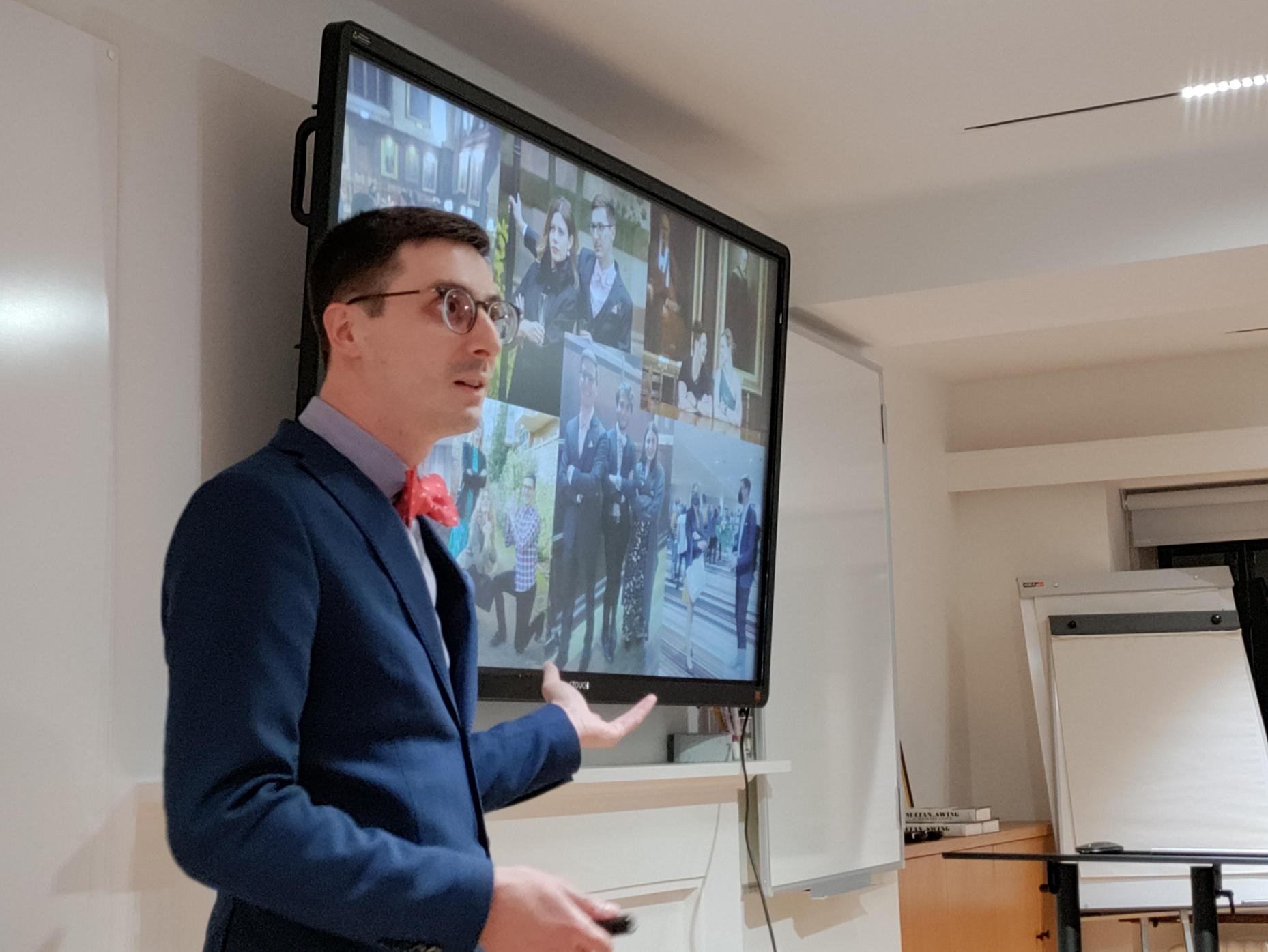 research has focused on the poor international performance of the US, the troubling mortality trends in England and Wales were examined to shed light on broader mechanisms affecting international mortality trends. Polizzi analysed ages and causes of death contributing to the divergence in life expectancy of England and Wales, using a harmonized cause-of-death dataset covering England and Wales and 20 other high-income countries. He decomposed gaps in male and female life expectancy between England and Wales and each individual comparison country into differences in age- and cause-specific death rates and diverging trends in these rates in 2011–2019. The work concludes with a comprehensive discussion that skilfully weaves together existing evidence on the mechanisms driving each of the causes of death included in his analysis, pointing to such potentially important factors as fiscal austerity, the obesity and opioid epidemics, as well as the effects of changes in cause-of-death coding practices for trends in dementia mortality.
Pictured Dr. Antonino Pollizi describing his work and experience during his DPhil times at LCDS, Oxford and Nuffield College
The jury noted that: “This work is an excellent example of using innovative methods combined with effective data visualization to increase the potential impact of demographic research.”
The awards were presented during a seminar chaired by Professor Melinda Mills, Director of LCDS, with Jury Members Professor Ridhi Kashyap and Associate Professor Charles Rahal.
It was followed by a panel discussion with the four recipients, focussing on their experiences as Phd Students, including what they would (and would not) do again, advice to early career scholars and goals for the future.