

Subscribe to our "Population in Perspective" Substack Here!
Date: In the Process of Being Confirmed
By: Jakub Bijak and Guests
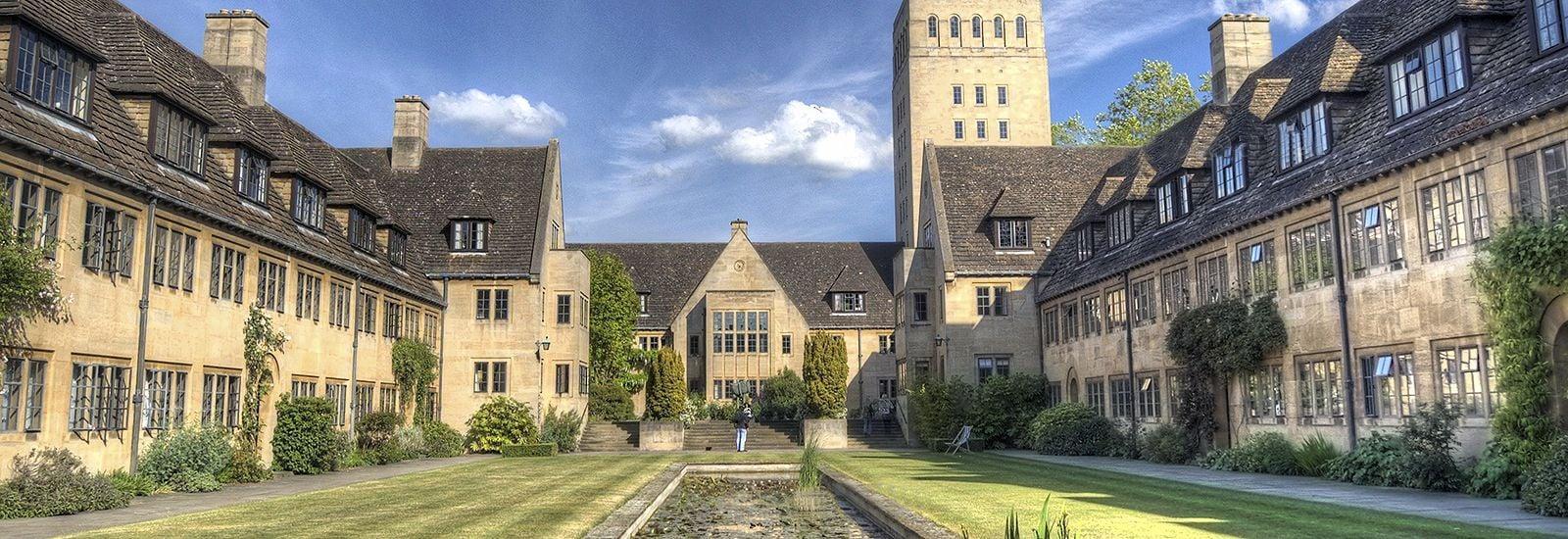
Location: Nuffield College, University of Oxford
Course description: This comprehensive, interdisciplinary short course provides foundations in applied Bayesian Statistics with a focus on methods for Population Data Science – a dynamically-growing area of research, connecting statistical rigour with fascinating real-life applications. Led by one of the pioneers of Bayesian thinking for Demographic Research, and illustrated by examples of Bayesian methods for estimation and prediction, the course will help the participants understand the main concepts and methods unlocking the study of uncertain processes. In addition, the participants will be able to appreciate the breadth of possible applications, such as local planning, national policy setting or human rights monitoring. The course is primarily intended for Masters students, doctoral and post-doctoral researchers, and other academics, but it is open to anyone with interest in population topics, who would like to enter into the world of population uncertainty equipped with state-of-the-art tools for dealing with unknowns – known and unknown alike.
Objectives: To familiarise the participants with the philosophy and methodology of Bayesian Statistics, and to enable them to use selected software tools and packages to application Bayesian methods in practice.
Learning outcomes: By the end of the course, the participants will be able to:
1. Understand the philosophical and statistical basics of Bayesian statistics.
2. Appreciate the different sources of uncertainty for various applications and the way in which they are reflected in models.
3. Specify a Bayesian model for a given problem, estimate it, and assess its quality and sensitivity to various assumptions.
4. Carry out an applied piece of Bayesian analysis, by using freely-available dedicated statistical software, and interpret the results.
Timetable (Subject to change): AM session 10:00-13:00, Lunch 13:00-14:00, PM Session 14:00-17:00
Lectures in the morning, practicals/computer workshops in the afternoon.
Day 1. AM: History and philosophy of Bayesian statistics. Bayes Theorem: prior, posterior, likelihood. Applications of Bayesian methods in demography. PM: Pen-and-paper exercises: deriving posterior probabilities for a few simple discrete distributions. Point-and-click Bayesian estimation in JASP.
Day 2. AM: Sources of uncertainty. Hierarchical models. Prior selection and elicitation. Brief introduction to numerical methods (MCMC, HMC). PM: Getting started: introduction to Stan. Coding simple models on pre-prepared data. Guided choice of individual mini-project topics; collection of data.
Day 3. AM: Model comparison, selection and averaging, Bayesian model critique. Sensitivity analysis: not only priors. PM: Guided work on mini-projects – Part 1: Data preparation, model design, coding, estimation and troubleshooting.
Day 4. AM: Guest lectures: real-life examples of Bayesian demographic models (details tbc). PM: Guided work on mini-projects – Part 2: Model critique and sensitivity analysis. Informative versus non-informative priors.
Day 5. AM: Building theory: complex models and uncertainty quantification. New directions of Bayesian demography. Finalisation of mini-projects and individual presentations (five minutes, five slides). Conclusions to the course.
Prerequisites: Undergraduate-level knowledge of statistics (any paradigm). Knowledge of calculus (integration) is beneficial, but not necessarily required.
Teaser: A short video featuring Jakub Bijak and John Bryant discussing Bayesian demography back in 2016.
Preliminary Reading
- Gelman A et al. (2013/2025) Bayesian Data Analysis: Third edition. CRC/Chapman & Hall.
- Bijak J and Bryant J (2016) Bayesian demography 250 years after Bayes. Population Studies, 70(1), 1–19.
- Bryant J and Zhang J (2018) Bayesian Demographic Estimation and Forecasting. CRC/Chapman & Hall.
Attendance will be recognised through Accredible badges. A shop link to register for the course will be forthcoming in the immediate future. The course currently costs £600 for the entire 4.5 days of sessions. A 50% fee-waiver is available for internal Oxford students and participants from low and middle income countries upon request: please email teaching@demography.ox.ac.uk for more details.
For any other or additional queries, please kindly contact teaching@demography.ox.ac.uk.