

Subscribe to our "Population in Perspective" Substack Here!
Postdoctoral Researcher
İhsan Kahveci is a computational social scientist specialising in survey methods, social networks, and hard-to-reach populations. He is a Postdoctoral Researcher at the Leverhulme Centre for Demographic Science and the Nuffield Department of Population Health, working with Professor Melinda Mills on the Oxford Martin Programme on Digital Pandemic Preparedness, which develops digital health tools for future pandemics.
His research develops new ways to sample and survey populations that are otherwise hard to reach, such as people experiencing homelessness and people who use drugs. This work follows two strands. The first advances network-based methods, particularly respondent-driven sampling and aggregated relational data. The second improves the quality and representativeness of online surveys through better design and recruitment strategies, and statistical methods for population inference from non-probability samples.
İhsan completed his PhD in Sociology at the University of Washington in 2026 and was a fellow of the International Max Planck Research School for Population, Health and Data Science at the Max Planck Institute for Demographic Research. In applied research, he has consulted on homelessness counts for the King County Regional Homelessness Authority and the Los Angeles Homeless Services Authority. He has also worked as a UX Research intern at Google and a Data Science for Social Good fellow at the eScience Institute.
Publications
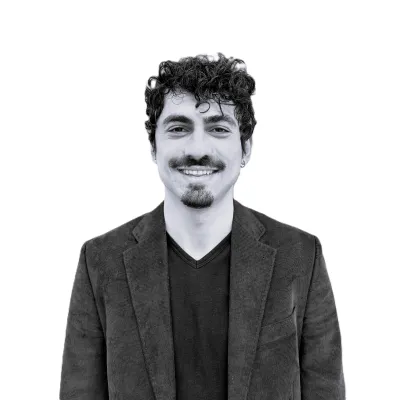
İhsan Kahveci
PhD
Postdoctoral Researcher

İhsan Kahveci is a computational social scientist specialising in survey methods, social networks, and hard-to-reach populations. He is a Postdoctoral Researcher at the Leverhulme Centre for Demographic Science and the Nuffield Department of Population Health, working with Professor Melinda Mills on the Oxford Martin Programme on Digital Pandemic Preparedness, which develops digital health tools for future pandemics.
His research develops new ways to sample and survey populations that are otherwise hard to reach, such as people experiencing homelessness and people who use drugs. This work follows two strands. The first advances network-based methods, particularly respondent-driven sampling and aggregated relational data. The second improves the quality and representativeness of online surveys through better design and recruitment strategies, and statistical methods for population inference from non-probability samples.
İhsan completed his PhD in Sociology at the University of Washington in 2026 and was a fellow of the International Max Planck Research School for Population, Health and Data Science at the Max Planck Institute for Demographic Research. In applied research, he has consulted on homelessness counts for the King County Regional Homelessness Authority and the Los Angeles Homeless Services Authority. He has also worked as a UX Research intern at Google and a Data Science for Social Good fellow at the eScience Institute.